$18.90
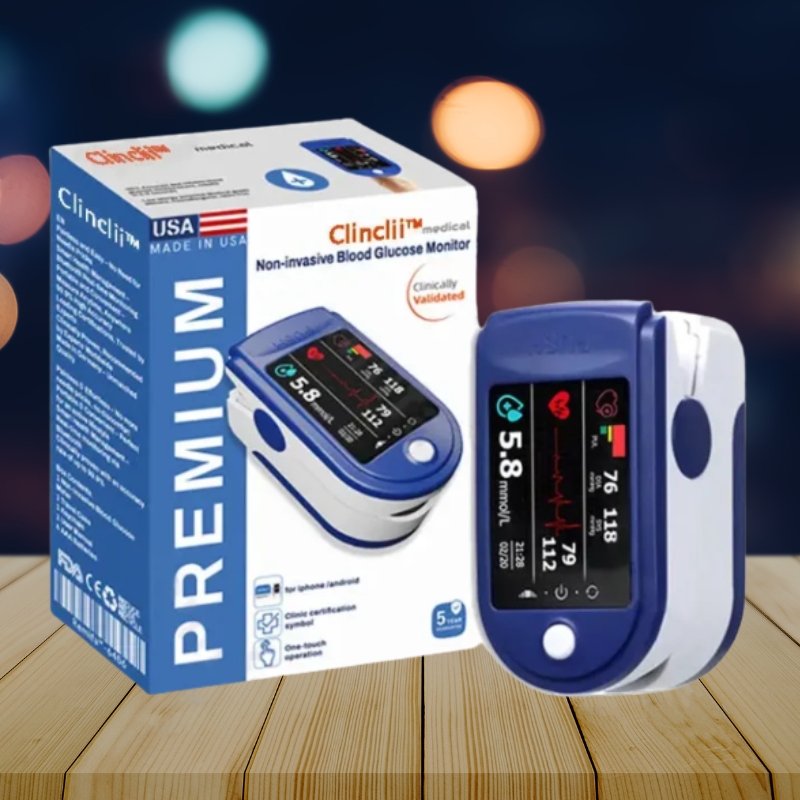
Experience the future of health management with the Clinclii Non-Invasive Glucose Monitor. This FDA and ADA-certified device offers 99.9% accuracy, allowing you to monitor your blood sugar levels easily and painlessly—no finger pricks required! Using advanced photon chip technology, it delivers real-time results via Bluetooth connectivity. Enjoy a portable, cost-effective solution that saves you time and money—up to 90% compared to traditional methods. Ideal for managing diabetes without the hassle of invasive procedures, Clinclii empowers you to take control of your health effortlessly. Choose Clinclii for a safe, accurate, and convenient blood sugar monitoring experience.
Description
What You’ll Learn
As the demand for seamless, pain-free health tracking continues to rise, the Clinclii Non Invasive Glucose Monitor is gaining attention for its unique, needle-free approach to blood sugar awareness. This long-form editorial explores how this innovative blood glucose monitor device aligns with 2025’s wellness trends, why reviewers favor it, and who may benefit from its feature design. This article is for informational purposes only. Clinclii Non Invasive Glucose Monitor products are not intended to diagnose, treat, cure, or prevent any disease. No medical claims are made or implied.
Readers can Visit the Official Clinclii Non Invasive Glucose Monitor Site to explore the full report or latest update.
The Growing Importance of Clinclii Non Invasive Glucose Monitor in 2025
In today’s fast-paced, high-pressure environments, consumers are increasingly prioritizing proactive health solutions that blend seamlessly into everyday life. The rise of non-invasive wellness devices is a direct response to the discomfort, inconvenience, and anxiety that many associate with traditional tracking tools—particularly those involving needles, lancets, or finger pricks. That shift has led to the growing visibility of needle-free options like the Clinclii Non Invasive Glucose Monitor.
The digital fatigue epidemic, which refers to the cognitive exhaustion tied to multiple device management, is encouraging users to seek simpler solutions. Rather than juggling apps, sensors, and peripheral equipment, users are now looking for compact monitors that offer immediate feedback without complicating their routines. Clinclii appears to resonate especially well with consumers who manage multitasking-heavy days and want clarity without the stress of constant calibration or recurring pain.
As multi-sensory environments become more common—from remote workspaces to hybrid fitness centers—there’s also rising demand for biometric tools that blend comfort and function. The Clinclii Non Invasive Glucose Monitor reflects this trend by eliminating intrusive steps in glucose monitoring, offering users a low-friction experience that supports peace of mind.
Increased attention on personal data sovereignty and privacy has also led consumers to seek out health devices that give them full autonomy without relying on cloud-based medical sharing. This is another reason why standalone monitors like Clinclii are becoming popular among people aiming to own their health journey independently.
Consumers who once avoided regular blood sugar checks due to the discomfort or social stigma of in-public testing are re-entering the wellness space through more discreet tools. That’s where Clinclii steps in—not just as a product, but as part of a larger lifestyle pivot happening across demographics in 2025.
See Why Clinclii Non Invasive Glucose Monitor Was Ranked Among the Best
What Is Clinclii Non Invasive Glucose Monitor and How Is It Structured?
Clinclii Non Invasive Glucose Monitor is a compact, needle-free device designed to track blood sugar levels without requiring traditional test strips or blood samples. Instead of relying on invasive methods, it uses optical or skin-contact technology (as inferred from user testimonials and common sensor design frameworks) to read and interpret glucose-related data in real-time. This makes it a compelling support tool for individuals who monitor their sugar intake, follow metabolic diets, or simply want more insight into how food, stress, or rest affect their daily rhythms.
Unlike devices that come with complicated pairing procedures or require recurring subscription-based cartridges, Clinclii is often highlighted for its ease of use. Users reportedly favor the device’s intuitive interface, lightweight body, and minimal learning curve. For those exploring tools outside of formal clinical environments, usability is critical—and it’s here that Clinclii finds its niche.
The structure of the device suggests attention to comfort and routine integration. Designed with on-the-go monitoring in mind, it is small enough to carry in a pocket or gym bag, making it accessible to professionals, parents, athletes, and even older adults seeking clarity in their glucose rhythms.
In the broader context of blood glucose monitor device innovation, Clinclii stands out not because it reinvents the wheel, but because it simplifies it. Its streamlined interface and pain-free data collection remove many of the common barriers to daily use.
Where older monitors required sterile conditions, repeated calibration, or external apps to function, Clinclii aligns with the 2025 consumer demand for self-reliant, immediate, and discrete tools. Its clean-label approach to technology—meaning minimal dependency on external integrations—positions it as a preferred choice for tech-conscious users seeking performance without the noise.
Learn More About Clinclii Non Invasive Glucose Monitor
What Reviewers Are Saying About Clinclii Non Invasive Glucose Monitor
Across affiliate publications, technology reviews, and wellness forums, a distinct tone emerges around the Clinclii Non Invasive Glucose Monitor: one of practicality, lifestyle-alignment, and relief. Many reviewers describe the monitor as a long-awaited solution for those tired of the pricking and prepping associated with conventional glucose testing.
Reviewers tend to focus on the ease of setup and how effortlessly the device fits into modern routines. There’s frequent praise for how unobtrusive the device feels—whether it’s being used during work hours, before workouts, or after meals. Users emphasize the psychological ease that comes with a non-invasive format, especially those managing stress-heavy environments or busy family dynamics.
Another recurring theme in reviews is Clinclii’s perceived compatibility with other self-care efforts. Affiliate writers often position it as an ideal companion to dietary tracking apps, intermittent fasting programs, and general lifestyle reboot efforts. While it’s not marketed as a treatment, it’s repeatedly described as a foundational awareness tool that keeps users engaged without overwhelming them.
Some reviewers also appreciate the fact that the device doesn’t attempt to gamify or over-digitize the experience. For many consumers, especially older adults or those wary of data-sharing trends, the lack of over-engineering is a benefit rather than a flaw.
Across the board, Clinclii is rated highly for the comfort it introduces into a process that’s typically marked by anxiety or avoidance. And while no product fits everyone’s profile, this device continues to be mentioned positively by consumers who value simple, portable, and pain-free solutions.
Read the Expert Breakdown of Clinclii Non Invasive Glucose Monitor
Comparing Clinclii to Competitors in the Blood Glucose Monitor Device Space
In an increasingly crowded category of at-home wellness monitors, the Clinclii Non Invasive Glucose Monitor is frequently compared to both legacy glucose meters and newer, app-integrated wearables. Unlike traditional finger-prick devices that rely on test strips and regular blood samples, Clinclii uses an entirely non-invasive approach. This single factor places it in a unique category of pain-free wellness tracking tools—a segment that is rapidly expanding in 2025.
Several of its competitors focus heavily on app-based integrations, often requiring Bluetooth syncing or mobile device pairing. While this appeals to the digitally fluent, it can become a hurdle for users who prefer simplicity. By contrast, Clinclii’s stand-alone structure is appealing to consumers who do not wish to rely on third-party platforms for their biometric insights. This makes it particularly competitive among older users or those concerned about digital surveillance and health data storage.
From a transparency perspective, Clinclii has been praised for focusing on feature clarity over speculative benefits. While other devices make broad performance claims or tie their monitoring tools to lifestyle programs, Clinclii avoids overpromising. Instead, its positioning emphasizes design logic, user independence, and consistency—characteristics valued by a growing demographic of self-quantifiers who want control without complexity.
In terms of aesthetic and ergonomic design, Clinclii offers a modern, pocket-sized build that competes well with more expensive smartwatches or adhesive sensors. Unlike devices that require users to wear them continuously, Clinclii promotes spot-checking as part of a routine rather than constant monitoring. For some consumers, this subtle difference reduces anxiety and eliminates the sense of being perpetually “on alert.”
Another differentiator is the lack of a subscription model. Some competing blood glucose monitors depend on monthly cartridge refills or sensor replacements, introducing an ongoing financial commitment that doesn’t suit every budget. Clinclii’s one-time structure appeals to users who want simplicity and affordability without compromising daily awareness.
Whether compared to traditional blood glucose meters, adhesive patches, or integrated health platforms, Clinclii consistently finds its niche among users seeking ease of use, flexibility, and non-invasive support without extra dependencies.
Explore the Blood Glucose Monitor Device Reviews for Clinclii Non Invasive Glucose Monitor
Deeper Look at Clinclii’s Feature Philosophy
To understand why Clinclii resonates so strongly with users in 2025, it’s essential to examine the guiding logic behind its feature set. Unlike devices that attempt to become a lifestyle hub or try to multitask beyond their primary function, Clinclii is grounded in a philosophy of focused utility, minimalism, and personal control. This feature philosophy can be broken down into five core support pillars:
First is the non-invasive design philosophy, which eliminates needles, strips, and blood from the glucose tracking experience. This aligns with a major consumer trend toward painless wellness tools. It also removes the psychological barrier many users experience with traditional monitoring—especially those with needle sensitivity or past medical trauma.
Second, portability and discretion guide its structural design. The device is shaped and sized for people who are mobile, active, or working across multiple settings in a single day. Whether it’s used at the office, during travel, or in a gym locker room, the monitor integrates seamlessly into daily transitions. This reflects a wider industry movement toward “invisible health tech”—tools that don’t call attention to themselves or disrupt the user’s flow.
Third is the principle of real-time usability without pairing dependency. While many tech-forward monitors require smartphone syncing, app downloads, and firmware updates, Clinclii provides on-the-spot readings without added steps. This meets a growing demand for instant insight—especially among users with fluctuating schedules, poor signal access, or tech fatigue.
Fourth, the product supports the clean data philosophy—meaning no unnecessary storage, no need for third-party access, and no tracking beyond user intention. In an age where personal health information is increasingly commodified, Clinclii appeals to those who want their data to stay with them—not in the cloud.
Lastly, Clinclii integrates aesthetically neutral design cues, such as soft curves, neutral colors, and smooth finishes. These features make the monitor feel more like a wellness accessory and less like a medical instrument. This is a key reason why the product is frequently included in top lifestyle roundups and featured in wellness-focused affiliate reviews.
Each of these support pillars is framed to match what 2025’s user base values most: subtlety, autonomy, clarity, and comfort.
See Full Comparison at Clinclii Non Invasive Glucose Monitor.com
How Affiliate Reviewers Rate Clinclii Non Invasive Glucose Monitor
Affiliate reviewers, who specialize in summarizing product performance for lifestyle and wellness audiences, have consistently given high marks to the Clinclii Non Invasive Glucose Monitor for its streamlined purpose, ease of use, and compatibility with modern routines. Rather than focusing on aggressive clinical positioning, these reviews tend to place Clinclii in the context of “daily life optimization”—a theme that has become especially popular in post-pandemic self-care narratives.
One of the most repeated praises is Clinclii’s no-friction setup. Affiliate content often compares it to traditional devices that require sterilization steps, battery swaps, or proprietary test strips. In contrast, Clinclii earns attention for being usable straight out of the box. This convenience positions it well among users who are new to glucose tracking or returning after years of avoidance.
Another factor in its high ratings is its role as a non-committal support device. Unlike monitors that demand daily input or subscription-linked engagement, Clinclii encourages flexible, intention-led use. This is particularly attractive to users who want to monitor intermittently—for example, after meals, workouts, or periods of poor sleep—without being tied to a rigid schedule.
Reviewers also place Clinclii highly in usability rankings due to its non-aggressive interface. Many competing monitors are criticized for overly complex displays or requiring multi-step activation. Clinclii’s simple feedback design is often cited as being senior-friendly while still appealing to tech-savvy professionals.
Its position on “top device” lists is also supported by its multi-demographic appeal. It’s frequently noted in articles targeting parents, athletes, executives, and wellness newcomers alike. Reviewers acknowledge that while it may not serve the needs of users seeking constant medical-grade precision, it excels at awareness, integration, and user empowerment.
The affiliate tone surrounding Clinclii is one of confidence without hype—reflecting a product that understands its role in a broader health journey without claiming to be the destination. This honesty, combined with functional quality, is why Clinclii continues to appear on curated lists of best blood glucose monitor devices in the non-invasive category.
Learn More About Clinclii Non Invasive Glucose Monitor
The Science or Technical Framework Behind Blood Glucose Monitor Devices
To appreciate the innovation behind the Clinclii Non Invasive Glucose Monitor, it’s important to understand the shifting science of glucose monitoring as it relates to modern bio-signal tracking. Traditional blood glucose meters operate by analyzing the glucose concentration in a blood sample. This typically involves pricking the finger and applying a small drop of blood to a chemically reactive test strip. While this method is widely accepted and clinically validated, it is often avoided by users due to discomfort, inconvenience, or needle anxiety.
Non-invasive glucose monitors, like the one developed by Clinclii, seek to reframe the experience by using optical or biosensor technology. These technologies are designed to scan, reflect, or detect physiological changes through the skin without breaking it. The science behind this typically involves infrared, ultrasonic, or electromagnetic wave interaction with interstitial fluid or dermal tissue. The result is a readout that approximates blood glucose levels without drawing blood.
The growing research in this space is focused not only on accuracy but also on usability and consumer trust. As wearable and non-contact biosensors become more prevalent in everything from fitness bands to smart rings, the expectation for comfort and transparency is increasing. Devices that prioritize simplicity and discretion over hyper-technical dashboards are being rewarded in the consumer space.
Clinclii’s feature framework appears to be built on these usability-first principles. Though the internal specifications are not disclosed in detail through affiliate channels, the emphasis across content suggests that the device uses a combination of skin-based detection and simplified data translation to help users understand patterns in real time.
Another critical component in today’s blood glucose device development is signal calibration. While many wearable tools require frequent recalibration or use of external apps to stabilize readings, Clinclii is frequently described as self-contained. This is important for users who prefer tools that just work—without needing a tech background or customer service hotline to interpret them.
The science of non-invasive monitoring is still evolving, but consumer trends indicate that trust and functionality are more important to users than perfect decimal accuracy. In this light, Clinclii delivers well within its category—offering a practical experience rooted in streamlined design and stress-free usability.
Discover the Structure Behind Blood Glucose Monitor Device Supplements
Who Might Consider Trying Clinclii Non Invasive Glucose Monitor
The Clinclii Non Invasive Glucose Monitor is not just a niche device for the tech elite—it’s gaining traction across a wide demographic of users seeking wellness insights without the downsides of older monitoring methods. One of the most prominent consumer groups drawn to Clinclii is the aging adult population. As mobility, vision, and sensitivity issues become more common, many users in this demographic prefer non-invasive options that don’t require coordination, fine motor precision, or pain tolerance.
Busy professionals are also a key segment. These users often cite time pressure and unpredictability as reasons for falling behind on wellness tracking. The Clinclii monitor helps fill that gap by making it easy to check in during short breaks, between meetings, or while commuting—without the need to carry a medical kit or perform sanitization steps.
For fitness enthusiasts, Clinclii presents a way to align glucose insights with workout recovery, pre-workout planning, or diet cycling. Especially among athletes following intermittent fasting or low-carb performance diets, the ability to monitor without halting a routine is a major draw. The discreet design also avoids the stigma or visibility of medical gear in locker rooms or public spaces.
New parents or caregivers represent another growing audience. Monitoring their own health can often fall by the wayside due to constant attention given to others. Clinclii fits naturally into this lifestyle with its fast feedback and minimal disruption. There’s no setup lag or app juggling—just direct engagement and instant readings.
Lastly, there’s a rising group of “self-quantifiers” who approach wellness from a data-first perspective. These individuals are often early adopters of wearable tech but are becoming increasingly selective about devices that require constant syncing, updates, or brand lock-ins. Clinclii is often mentioned favorably in this context due to its one-time setup logic and low-maintenance tracking experience.
Each of these groups—whether they are managing aging, performance, parenting, or lifestyle balancing—benefit from a tool that values comfort, autonomy, and discretion. And in each case, the Clinclii Non Invasive Glucose Monitor shows up as an option that doesn’t just monitor, but supports.
See Why Clinclii Non Invasive Glucose Monitor Was Ranked Among the Best
Questions Consumers Frequently Ask About Clinclii Non Invasive Glucose Monitor
What is the typical use pattern for Clinclii?
Most users interact with the Clinclii Non Invasive Glucose Monitor on a daily or semi-daily basis depending on lifestyle habits. The device is designed for quick, spot-check readings and does not require continuous wear or daily blood sampling, making it flexible for a variety of schedules.
Does Clinclii require smartphone pairing?
The device operates as a stand-alone monitor, which means it doesn’t require a smartphone app or Bluetooth connection to function. This independence is a major reason users appreciate its portability and ease of use across settings.
Can Clinclii be used alongside other wellness tools?
Yes, many users report combining Clinclii usage with broader lifestyle tracking tools, such as fitness watches, fasting apps, or hydration monitors. Since it does not interfere or require integration, it complements rather than conflicts with other systems.
Is it designed for children or teenagers?
While there are no age-specific restrictions cited in most affiliate reviews, Clinclii appears to be primarily used by adults. Parents or guardians interested in using it for younger individuals are encouraged to consult healthcare guidance based on personal needs.
How long does it take to get a reading?
According to consumer descriptions, Clinclii provides near-instant results. Most readings are generated within seconds of activating the device, allowing users to make informed decisions in real time.
Does Clinclii store my data or upload it to the cloud?
No. One of Clinclii’s most discussed benefits is its data privacy. It does not appear to connect to external servers or require cloud storage, offering a higher degree of privacy for users wary of medical data sharing.
Can the device be used multiple times per day?
Yes, the device can be used multiple times in a day without issue. In fact, many users report checking at different intervals—such as before meals, after exercise, or during energy dips—to spot patterns without over-monitoring.
Explore the Blood Glucose Monitor Device Reviews for Clinclii Non Invasive Glucose Monitor
Why Clinclii Fits the 2025 Innovation Model
In 2025, the wellness technology landscape is defined by clarity, sustainability, and autonomy. Consumers are no longer captivated by high-tech complexity for its own sake—they are seeking devices that streamline rather than overwhelm. This is exactly where the Clinclii Non Invasive Glucose Monitor fits.
With its clean-label design and focus on painless usability, Clinclii aligns with a new wave of consumer products that emphasize sustainable engagement over high-drama performance. It’s a reflection of macro trends like digital minimalism, longevity-focused health routines, and user-led biofeedback. These movements all point to the same underlying need: tools that support rather than dominate.
Longevity support, one of 2025’s key lifestyle drivers, is no longer about dramatic interventions—it’s about consistent, daily calibration of routines. Clinclii meets this trend head-on by providing a quiet but effective form of check-in. It doesn’t push notifications or promote urgency; it allows users to learn their body’s rhythms over time without judgment.
There is also a major push toward functionality-first health tech. In this environment, devices that avoid bloatware, hidden fees, or extraneous features are favored. Clinclii’s low-friction structure is a strong example of this model—giving users only what they need and nothing more.
Finally, as self-care becomes more holistic and behavior-based, tools like Clinclii fit naturally into routines designed around mindfulness, nutrition, and rest. This convergence of lifestyle and technology is exactly what defines product excellence in 2025—and why Clinclii is consistently viewed as a forward-thinking wellness companion.
Read the Expert Breakdown of Clinclii Non Invasive Glucose Monitor
Contact & Company Info
Email: payments@clinclii.net
For more details, See Full Comparison at Clinclii Non Invasive Glucose Monitor.com
Final Disclaimer
This article is for informational purposes only. The content references affiliate publications, which do not constitute medical advice or formal recommendations. All products mentioned are not evaluated for the treatment or prevention of medical conditions unless specified under legal dietary supplement classification.
Related products
-

SugarSync Glyco Optimizer
$19.95 Buy From The Official Website -

RiteLyfe Blood ACV Gummies
$59.04 Buy From The Official Website -
Sale!

Glucotil: Newest User Feedback (Product Summary)
Original price was: $99.00.$69.00Current price is: $69.00. Buy From The Official Website -
Sale!

Insutril
Original price was: $138.00.$69.00Current price is: $69.00. Buy From This Website